If you hear a loud thud or repetitive knocking when your washing machine stops filling, your plumbing system is experiencing a sudden hydraulic shock. Banging plumbing pipes Peoria AZ are not a random quirk of an aging house. The noise comes from fast-moving water slamming into a suddenly closed valve or from unsecured pipes striking your wooden wall studs. Ignoring this noise will eventually cause pipe fittings to fracture and leak water inside your walls.
Here is exactly what causes your pipes to bang, how to diagnose the specific type of noise, and the exact steps required to silence your plumbing system permanently.
Primary Causes of Banging Plumbing Pipes Peoria AZ
Pipes make noise because water is heavy and moves with immense force. When that force is not controlled, the physical pipes take the damage.
Water Hammer In Plumbing Pipes
Water weighs 8.3 pounds per gallon. When it travels through your home plumbing system at high speed, it carries significant momentum. Modern appliances use electric solenoid valves that snap shut instantly. When a washing machine or dishwasher valve closes in a fraction of a second, the moving water hits a solid wall.
This creates a massive shockwave that travels backward through the pipe. This phenomenon is called water hammer in plumbing pipes. The shockwave forces the pipe to violently jerk and strike the surrounding framing.
Unsecured Pipe Straps
Plumbers secure water lines to the wooden studs inside your walls using metal or plastic straps. Over years of use, the constant vibration of running water causes these straps to loosen. The extreme summer heat in Arizona can also cause cheap plastic pipe clamps to become brittle and break.
Once a strap fails, the pipe hangs loose. Every time you turn on a faucet, the change in water pressure causes the pipe to swing and bang against the drywall or wood framing.
High Municipal Water Pressure
The municipal water supply in Peoria often enters residential neighborhoods at pressures exceeding 100 pounds per square inch (PSI). Residential plumbing systems are designed to handle a maximum of 80 PSI.
When water pressure is too high, water moves through your pipes too fast. This amplifies the force of water hammer and causes severe banging. High pressure also destroys rubber gaskets in your toilets and drastically shortens the lifespan of your water heater.
Thermal Expansion in Copper Lines
If you hear a rhythmic ticking or tapping sound that slowly fades away after you run the hot water, you are hearing thermal expansion. Copper pipes expand as they heat up. If a copper hot water line passes tightly through a hole drilled in a wooden stud, the pipe will rub against the wood as it grows. This creates a knocking sound.
Diagnosing Noisy Water Pipes Peoria AZ
You can pinpoint the exact cause of your noisy water pipes Peoria AZ by paying attention to when the sound occurs and what type of noise it makes.
| Sound Type | When It Happens | Likely Cause |
|---|---|---|
| Single loud thud | When a fast-closing valve shuts off. | Water hammer. |
| Rapid machine-gun rattling | While a faucet or toilet is actively running. | High water pressure or a bad fill valve. |
| Ticking or tapping | Immediately after turning on hot water. | Thermal expansion rubbing on wood. |
| Dull knocking | When any fixture is turned on or off. | Loose pipe straps. |
Step-by-Step Fixes for Banging Pipes
Fixing the noise requires addressing the pressure and absorbing the shock. Here are the most effective solutions.
Install Water Hammer Arrestors
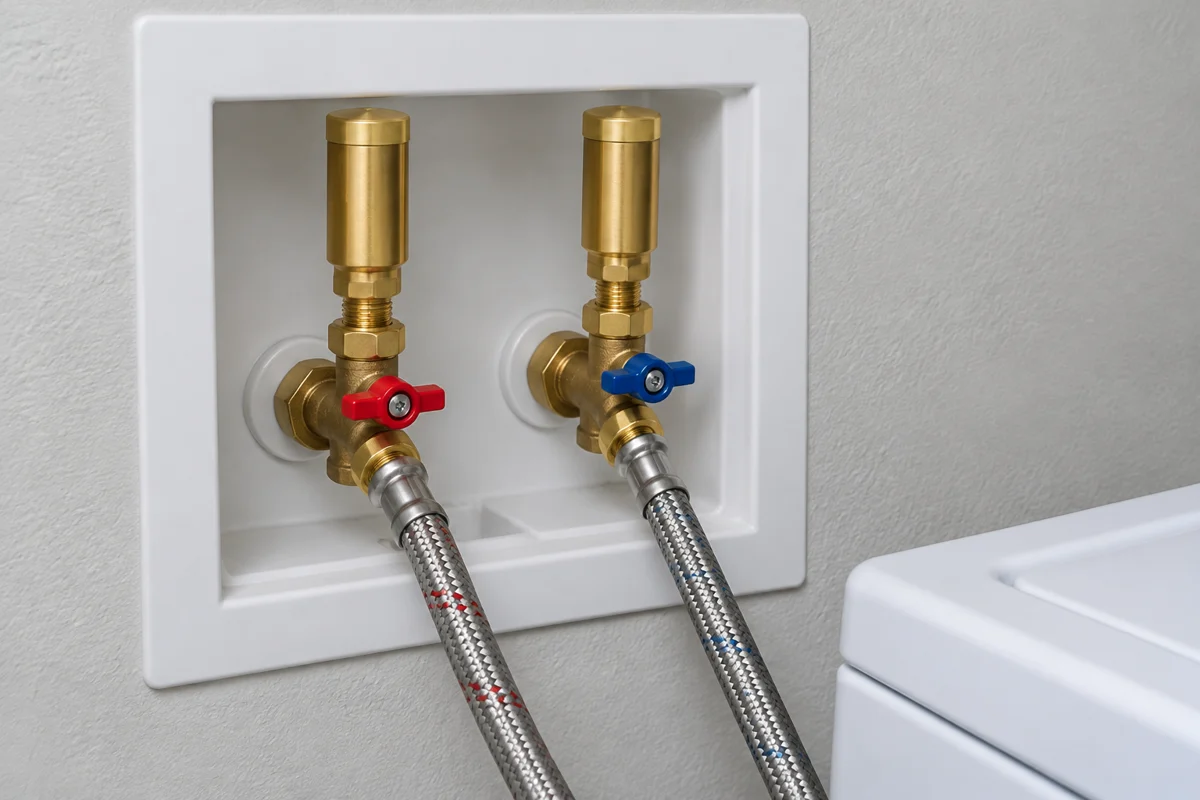
A water hammer arrestor is a small copper cylinder containing an air bladder and a spring-loaded piston. When a valve snaps shut, the water shockwave hits the arrestor instead of the pipe wall. The piston compresses the air, absorbing the impact and silencing the noise.
You can install arrestors directly onto your washing machine valves without cutting any pipes. You simply unscrew the washing machine hoses, screw the arrestors onto the wall valves, and reattach the hoses to the arrestors. This part costs roughly $15 to $30 at a local hardware store and takes five minutes to install. For water hammer occurring at a shower or kitchen sink, a plumber must cut into the drywall and solder arrestors directly into the copper or PEX water lines.
Test and Replace the Pressure Reducing Valve
Every home in Peoria should have a Pressure Reducing Valve (PRV) installed on the main water line. This bell-shaped brass valve sits near your front hose bib or inside your garage. It reduces the high city water pressure down to a safe 50 to 70 PSI. PRVs fail every seven to ten years.
You can test your home water pressure yourself. Buy a screw-on water pressure gauge with a lazy hand indicator. Attach it to your front hose bib. Turn the water on fully. If the gauge reads above 80 PSI, your PRV has failed. Replacing a PRV requires cutting the main water line and soldering a new brass valve into place. This professional repair typically costs between $300 and $600 depending on the pipe size and location.
Bleed the Plumbing System
Older homes built before the 1990s often have air chambers instead of modern water hammer arrestors. An air chamber is simply a vertical pipe capped at the top. Over time, the trapped air dissolves into the water, and the chamber fills with water, rendering it useless.
You can recharge these air chambers by draining your plumbing system. Turn off the main water valve to your house. Open the highest faucet in your home, followed by the lowest faucet (usually an outside hose bib). Let all the water drain out. Once the pipes are empty, air fills the chambers again. Turn off the faucets and slowly turn the main water valve back on.
Secure and Insulate Exposed Pipes
If your pipes are banging in an unfinished basement, crawlspace, or garage, you can easily secure them. Purchase foam pipe insulation tubes and wrap them around the exposed pipes. Secure the foam with zip ties. Next, install heavy-duty galvanized pipe straps every four feet to lock the pipe against the wooden framing. The foam provides a cushion that absorbs vibration, and the straps prevent the pipe from swinging.
When to Call a Professional Plumber
While screwing an arrestor onto a washing machine valve is a simple weekend project, opening up walls to fix a banging pipe is not. You need a licensed plumber if the noise is coming from inside a finished wall or beneath your concrete slab foundation. A professional will use thermal imaging and acoustic listening devices to locate the exact point of impact without destroying your entire wall.
You also need a professional if your water pressure exceeds 80 PSI. High pressure is a whole-house threat. A plumber will correctly size and install a new PRV, ensuring your entire plumbing system is protected from ruptured pipes and premature appliance failure.